Can AI Replace Coaches: 3 Reasons Why Real Change Still Requires Human Guidance
A few weeks ago, I was sitting over coffee with a friend who looked at me — half concerned, half amused — and asked:
“Aren’t you out of a job? I mean… all coaching, training, and mentoring can be done by AI now.”
He was both right — and completely wrong.
Let me start by saying this: I’m a passionate user of AI. My devices overflow with different apps. And there’s not much I haven’t tried doing with AI — from workflows, brainstorming, editing, and design, to learning languages, getting coaching and mentoring prompts, and even using AI to learn how to better use AI.
Not that I’m an expert, but I’ve explored enough to taste both its potential and its limits. And in that process, I’ve learned where AI is incredibly helpful — and where something fundamentally human is still irreplaceable.
Because it’s not about a competition between AI and humans. It’s a question of what kind of change you’re actually looking for.
Do you want better answers?
Or do you want a different relationship to the patterns shaping your life and leadership?
Do You Just Want to Get Better? Or Become More Impactful?
AI is amazing – as long as you keep your human mind switched on. AI can help you become the “best” version of yourself — more efficient, more knowledgeable, more organised…
But it can’t help you become the version of you whose presence and actions create meaningful impact. Because authentic power isn’t about perfection. It’s not about fixing yourself or adding more to your cup.
Becoming someone who has grounded, meaningful impact — the one who doesn’t shrink, who can stand in their own truth, and whose presence creates positive ripples — doesn’t begin with adding more skills or information. It begins when you start loosening identification with what you learned you had to be in order to belong, succeed, or stay safe: the roles, loyalties, and identities that once helped you survive, but now quietly keep old patterns in place.
Here’s the heart of it all: AI can fill your mind with information. But it cannot free you.
You’ve probably heard the saying, that you can’t solve a problem at the same level of consciousness that created it. And while you’re not a problem to solve, the same principle applies to your growth. So here’s why I’m convinced human guides are not out of a job.
1. Awareness — the Dimension AI Can’t Access
AI doesn’t experience. It processes. AI operates within information. Humans operate within awareness. And that distinction is crucial.
Because AI can reflect your words back. It can recognise patterns. It can even help you spot blindspots — if you train it well enough. But it can’t truly see you. It can only mimic seeing by matching patterns that appear as understanding.
When AI “sees” you, it analyses you. When a human witnesses you, they perceive you — not through data, but through presence. Which takes me to the next point…
2. Presence — the Transmission That Upgrades You
This one is my favourite, because when I became aware of it, everything changed. True guidance doesn’t come from data. It comes from awareness that can hold paradox, uncertainty, and emotion. And it needs someone with lived experience — someone who has walked the terrain and can be present to your journey.
But here’s the real thing: when you’re in the energy of someone who has integrated what you’re still (un)learning, something in you calibrates to that level. It’s why we often become like the five people we spend the most time with — as you’ve probably heard. Because their presence rewires us.
That’s why I personally invest into guidance from those who already live what I aspire to. It’s not just for their content and it’s not for their “powerful coaching questions.” It’s because their presence upgrades me.
3. Relationship — the Space Where Things Shift
A friend who listens after something hit you hard doesn’t just identify themes in your story. They feel you. Or a guide who looks at you while you know they’ve been there, isn’t just mirroring your language. They are holding your experience in their nervous system. Their memory. Their heart.
That’s the difference between being analysed and being received. When you’re truly witnessed, something shifts in you: your nervous system, your emotions, and your mind start to release tension. To co-regulate.
And then…you start to see differently. Because that co-regulation frees you. Not just because someone identified your patterns. But because they saw them and stayed connected.
Beyond Traditional Training and Coaching
That’s why the spaces I hold aren’t just about giving you more content or techniques. They are about helping you see the invisible dynamics you’re part of — and supporting you to reposition yourself within them.
They bring together lived experience, guidance, presence, and relational space to support a different kind of shift: not just understanding yourself better, but seeing the roles and dynamics you’ve been part of — and finding a more honest, sustainable place within them.
Freebee: Get your Free E-book
Unhooked:
5 Invisible Dynamics to Unhook from — So Things Can Move Again
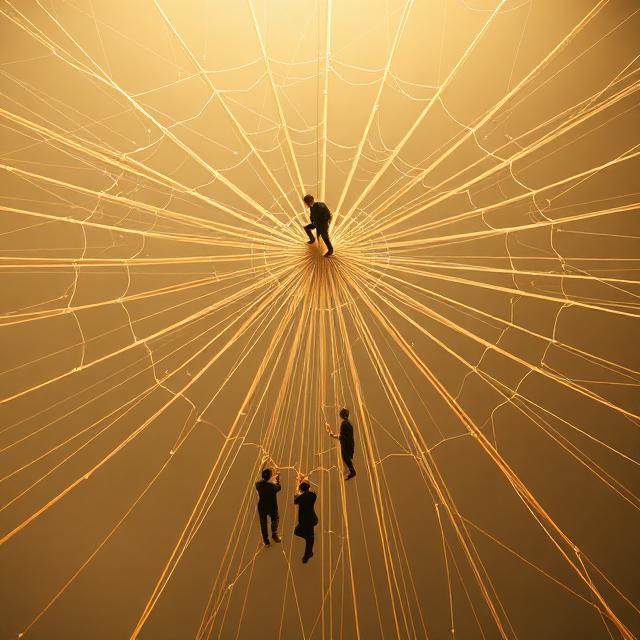
Sometimes nothing is “wrong” on paper — the strategy makes sense, the people are capable, the goals are clear. And yet… progress stalls. Tension lingers. The same patterns keep repeating. That’s usually not a motivation or skills problem. It’s a hidden dynamics problem.
In this guide, you’ll discover five common systemic patterns that quietly hold people, teams, and organizations in place — even when everyone is trying their best. When you start to see them, something shifts. You stop pushing harder — and start moving smarter.
This is not another self-improvement handbook. It’s about understanding the deeper patterns that drive behavior — and what it takes for movement to return.